In delivery software, the riskiest second is not on the motorway. It is the moment a box changes hands: at pickup, and again at the doorstep. When something goes missing, everyone remembers that moment differently, and the software usually has nothing to say.
When I designed Pin2Pin, a logistics platform for Log-e, we saw this again and again in research. We interviewed drivers and the office teams who plan their days, and watched real pickups and deliveries. Errors happened at the handover, and nothing recorded them. Status lived in phone calls to the driver.
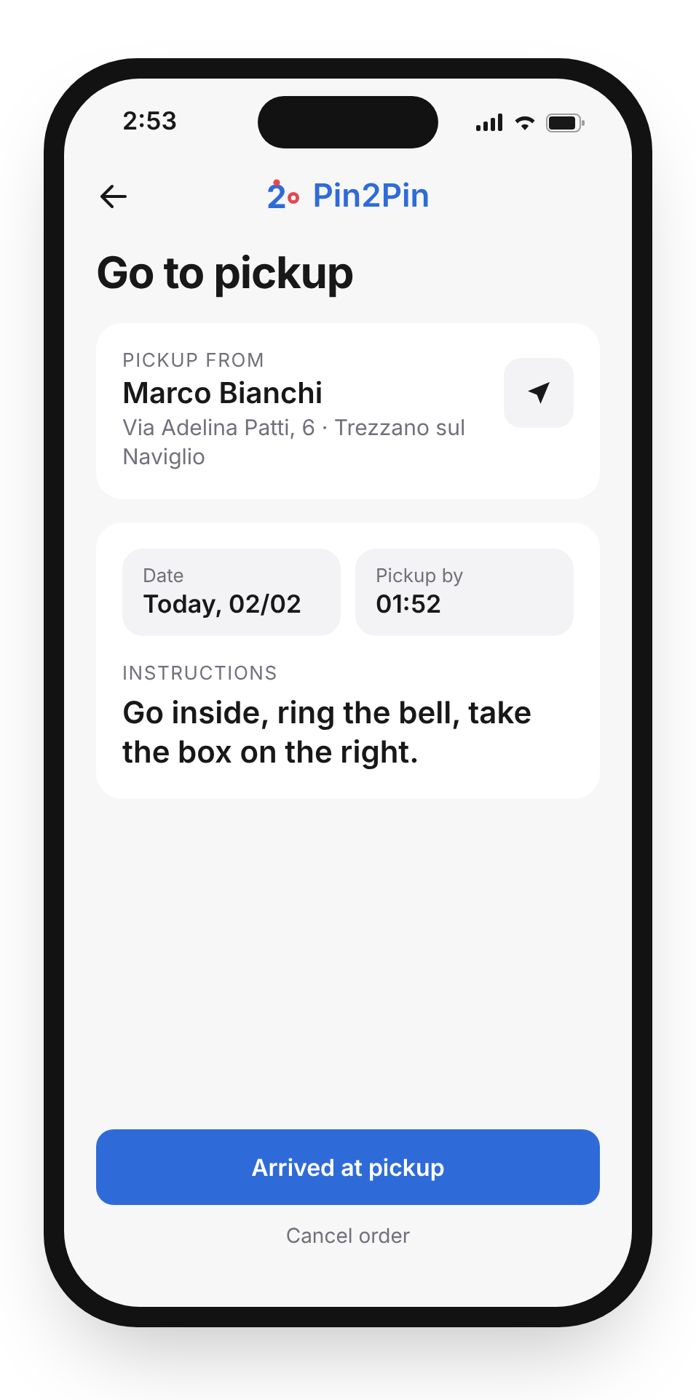
The quick answer, and why it fails
The obvious design is a tick box: “Picked up.” One tap, and the driver moves on. It respects the driver’s time, which matters; drivers told us plainly that they don’t need a complicated app, they need to know what to do next.
But a tick box proves nothing. When a customer says a box never arrived, the office has a tick and a driver’s memory. That is not evidence; it is an argument.
The proof has to be part of the step, not a step after it.
Put the proof inside the flow
So we didn’t add a “proof” screen at the end. We built scanning and a photo into the pickup itself, one tap away, with a live count of the boxes already scanned. The count does two jobs at once:
- For the driver, it shows when the job is complete, so there is no guessing and no second trip.
- For the office, the scan and photo become a record, with a time and a place, if something goes wrong later.
The driver doesn’t experience this as extra work. Scanning is how they know the pickup is done. The record is a side effect.
Testing kept it honest
We tested every release with drivers and office teams, more than twenty rounds over two years. Each round, what people struggled with was documented and shaped the next version. The handover flow survived those rounds because it answered a question both sides were already asking: is this finished?
After launch, Log-e reported 40% fewer status calls between drivers and the office. I can’t credit that to one screen; live tracking and a clearer dashboard did their part. But the principle behind the handover became one I use everywhere now.
The rule I took away
When a moment matters, don’t ask people to document it afterwards. Design the step so that doing it well and recording it are the same action. If the proof is a separate chore, it will be skipped exactly when it is needed.