At Politecnico di Milano’s DensityDesign Lab, our team of seven asked a simple question: how do car brands make their models look green on YouTube, when their adverts rarely make bold green claims?
We collected 90 adverts, 30 each for petrol, hybrid and electric cars, and read every one three times, each time with a new question. Where is the car shown? How is its story told? How is it described?
The fine print is there
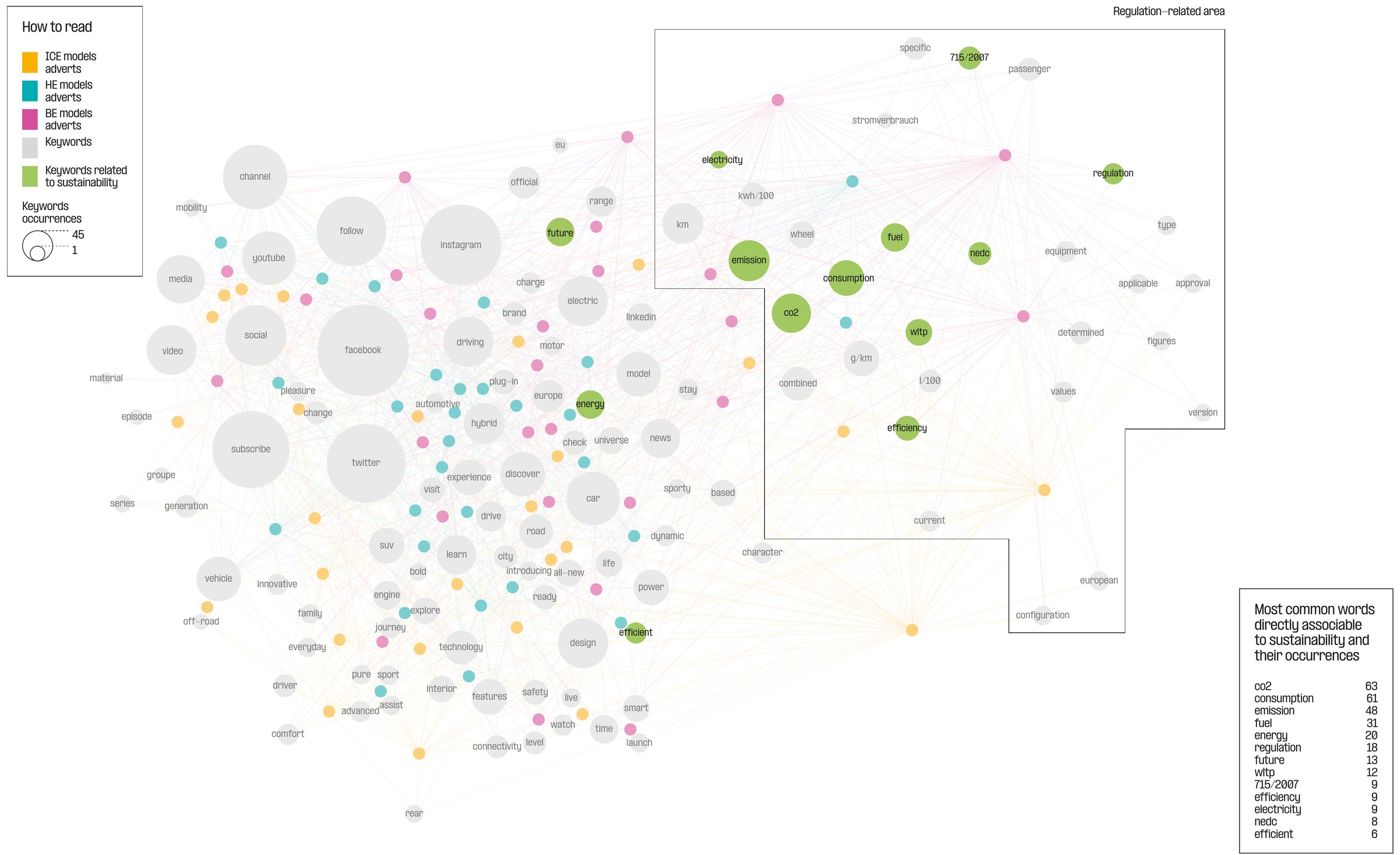
Many adverts end with a block of legal text: fuel consumption, CO₂ emissions, the regulation the figures were measured under. Legally, the information is present. We wanted to know whether anyone could actually read it.
So we measured. We extracted the text with OCR, timed how long it stayed on screen, and estimated the time needed to read it with reading-time tools.
Across the adverts, the pattern held. When this information was included, most adverts didn’t give enough time to read it. It sat at the very end, in a small block, often shown for less time than reading requires. To read it, you have to pause the video.
Information you can’t read in the time you’re given isn’t information. It’s decoration.
Why this matters outside advertising
I work on product interfaces now, not adverts, but I see the same move everywhere: terms shown in a modal that closes on the first tap, allergen details behind a link nobody opens, a status message that disappears before it registers. The information exists, so a box is ticked. The person it was for never received it.
In the research, the useful step wasn’t to say “the text is too fast.” It was to count: screen time against reading time, advert by advert, so the claim could be checked by anyone. That is how we ended with 13 findings, each traceable to its data, instead of an opinion.
What I check now
- Time: is the information on screen long enough to be read by someone in a hurry?
- Place: does it appear at the moment of the decision, or after it?
- Proof: can I count how often people actually see it, rather than assume they do?
It changed how I design allergen information at Elegant Menu: structured, and shown on the dish itself at the point of choice, not in a separate legal page.